The Wandering Isles: Session 85
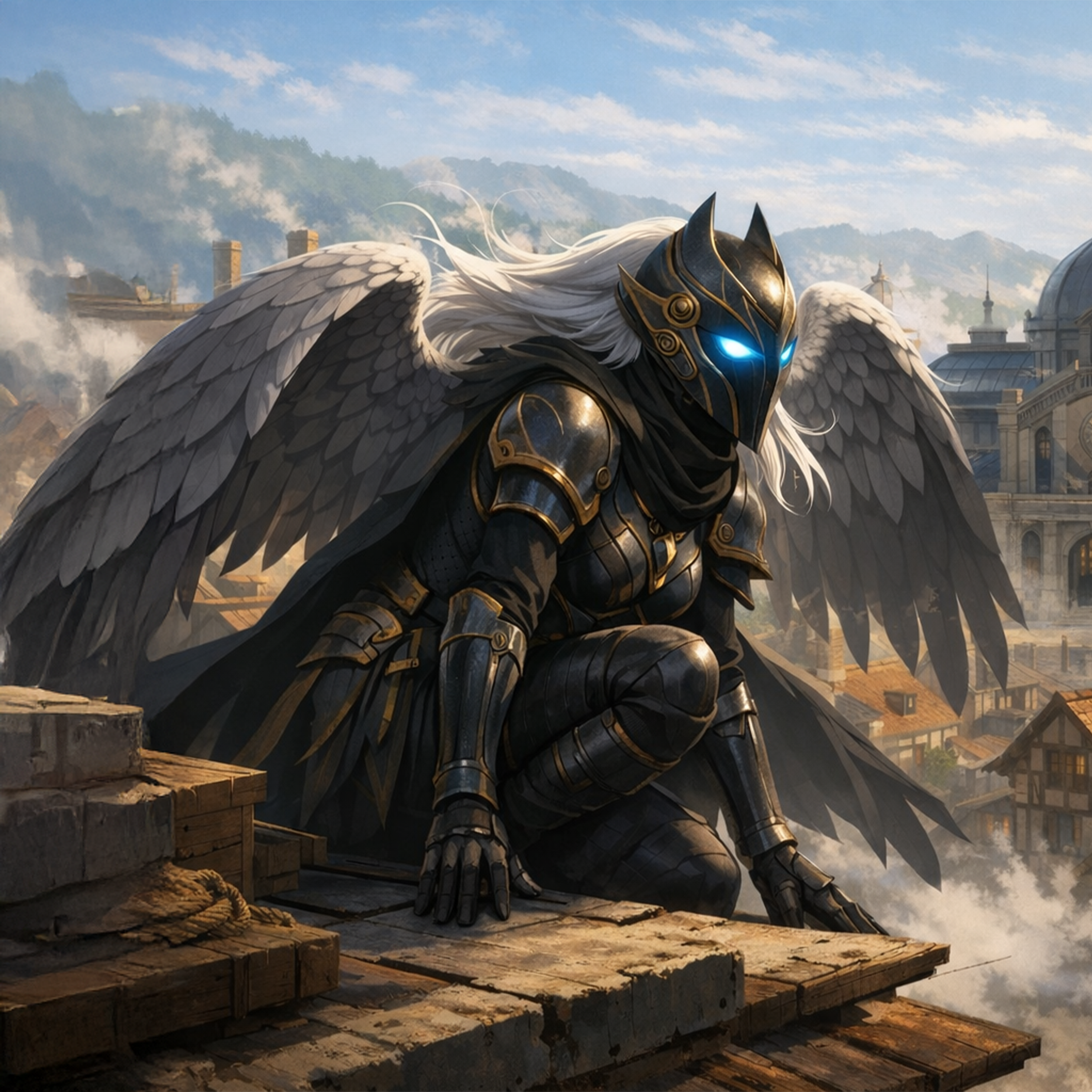
The 24th of Searpeak began with a strange kind of calm, the kind you only get when everyone knows the clock is ticking. They had one week, seven days to prepare and plan a museum heist, and still leave enough time for Weslyn to meet Delphini as arranged. It was a narrow window, and everyone felt it.
Dash was the first crack in that fragile routine. He slipped out early, quietly, and without a word. When the others began moving through their morning, he was already gone.
Hatsu started his day where his priorities lived now, with the people he refused to leave behind. He checked on Boreal, his adopted brother, still keeping himself hidden aboard the ship. Boreal didn’t waste time sitting in fear. He was practicing, blade in hand, working his forms like the world hadn’t just tried to swallow them whole.
Eldrin took to the streets, not to shop, but to understand. Anbudon wore its growth like a bruise. Tall brick mills and iron-framed workshops rose over older timber buildings, smokestacks hissing into the sea air. Vendors shouted over one another, selling hot bread, fried fish, machine parts, lamp oil. Tailors and cobblers worked shoulder to shoulder with welders and scribes in the crowded side streets. Guards patrolled in practical coats, present but not oppressive. Beneath it all sat something sharper than smoke, a quiet distrust of magic. Here, people trusted locks and steel over spells, and the city looked like it was growing too fast while insisting everything was fine.
Amaedrianna moved with purpose. She checked in with Eos, warning her she’d be scouting rooftops, then made for the museum. From above, the city became a map of class and control, old timber roofs stitched into newer brick and iron structures, chimneys everywhere, smoke drifting low. Clotheslines and water barrels, vent pipes and maintenance ladders gave way to cleaner stone courtyards and larger roofs uphill. The museum dominated the skyline, a heritage hall paired with a cleaner annex, a silhouette that stood out like it was designed to be seen. Bell towers, clock faces, and mechanical vents that exhaled steam in sudden bursts gave her vantage points, but also reminded her that any lingering too long would leave her exposed.
She searched for weak points, dummy windows, hidden access. Etchings hinted at passages, but nothing revealed how to trigger them. She tested the craftsmanship instead, picking at the putty around a pane of glass to see if she could remove it. Then she sent Albi, her familiar, into the building.
Through Albi’s senses, the museum’s true nature revealed itself. The basement level felt cooler, cleaner, built from stone and iron. Fewer decorations, everything functional. Staff-only corridors with no public signage, a receiving area with scales and a ledger desk, lockers and coat hooks, a break table with a kettle. Conservation rooms lined with tools and solvents, benches arranged for delicate work. A security office with logs, keys, a shift board, chime and alarm hardware. Guards and staff moved with purpose, no idle chatter, and iron-reinforced doors appeared more often than they did upstairs.
On the way out, Amaedrianna accidentally knocked the glass while trying to fix it. She turned the mistake into a test. The response was immediate. Within thirty seconds a guard arrived, then more, stacking in fast and coordinated. They spoke into their sleeves, as if communicating through some kind of hidden device. It was a warning wrapped in proof, this building would not forgive carelessness.
While she was learning the museum’s teeth, Weslyn took a different approach. He walked in through the front and paid two Aurums to secure free entry for a week. Inside, he didn’t just learn about the city, he learned about himself.
The museum was old wood, old stone, and old stories scrubbed clean enough to feel polite. It felt watched even when no one spoke. The founders were displayed like saints, the details sanded down until only civic virtue remained. The Greenward section carried tension under the polish, and the annex felt less alive, more engineered, with clockwork exhibits designed to draw the eye while exposing movement. There was no sign of the egg, only the absence of it, like the building itself refused to acknowledge what it kept hidden.
And then he saw it. His name. Not once, but repeatedly, threaded through the founders material. Theiwyse, presented in a polished civic glow, “builders of Anbudon,” not messy people, not complicated people. Names like Gareth, Rowan, Llewelyn, Seren, and Rhys appeared again and again, and the discovery landed in him like a stone sinking through water.
In the Greenward Rebellion gallery, Rowan was framed as an organizer, a speaker, a leader, but the writing carefully avoided the dangerous truths, who profited, who betrayed, who benefited after the rebellion. The legacy was preserved, the sharp edges trimmed away.
Still, the timeline was there. In 962, the council’s plans to industrialize major sections of the ancient forests were revealed. A pro-growth faction pushed expansion at all costs, threatening the Arbores wilderness and older values. Rowan organized a preservation movement, rallying citizens for sustainable growth and forest protection, and the movement became a political threat to the elite. Rowan was arrested for sedition. Rowan was executed to end dissent, but her death made her a martyr, inspiring long-term unrest. Later, when an external threat rose from a neighbouring city-state, Rhys used the crisis to unite the city around the values Rowan represented, though little else was recorded.
Weslyn tried to press deeper, asking for access to the archives, but was told to return later to speak with a curator.
By the time everyone regrouped at the inn, the third floor reserved entirely for them, one absence stood out. Dash still hadn’t returned.
Eos asked Weslyn about his trip, and he explained the museum now had free entry, and that he’d overheard talk of a guest of honor coming. There was an archive, but not open to the public, and that frustration sat under his words. He also revealed a key detail, the Cogsworths owned the building. Amaedrianna didn’t flinch. Ownership didn’t matter if they were going places the public never saw.
Then Weslyn, in typical fashion, revealed how he’d done it. When Eldrin and Eos tried to figure out what he’d paid, he didn’t understand the values well enough to answer. When Eldrin asked if he’d paid “bells,” Weslyn nodded, unaware he’d spent two Aurums, about two hundred bells. It sparked the kind of humour only exhaustion can breed.
That humor turned sharper when Eos joked that Eldrin had purchased orphans, and Amaedrianna piled on by calling it “basically slave labour,” even though it was only a donation to an orphanage. Eldrin tried to redirect the teasing by tossing Dash into the conversation as another donor, but the mockery stuck to him anyway, and he wore it with strained patience.
Amaedrianna pulled them back to business. She described the layout she’d found, and admitted she still hadn’t located the vault. Eos offered a new tool, she could teleport herself five hundred feet with one other person. It could be useful, if they didn’t end up inside a wall. Weslyn warned her, that kind of magic could get her “put on a boat,” invoking the old tradition of sending magic users out to sea. Amaedrianna told Eos to practice the spell regardless, and told Weslyn to keep the job hush. No discussing the egg.
Hatsu brought practical grounding, an inventory of what resources had been loaded onto the ships, and a reminder that his healer’s kit needed replenishing. The group measured distances, the inn was roughly one to 1.2 kilometers from the museum, with winding streets and side routes. Eldrin didn’t think that mattered much for rooftop travel, or anyone who could take to the air.
They started building entry options. Amaedrianna and Eldrin brainstormed ways Eldrin could be present without raising suspicion. Eldrin noted the sleeve-communication device and guessed there might be a barracks or guard post tied to the system. Then he offered a more subtle angle, becoming a kind of holy guard, someone who could bless the guards and gain access legitimately. That idea drifted into something stranger, maybe Weslyn could plant a primitive idea in a guard’s dreams over the next few days, setting up a future opening. Weslyn pushed back, saying it might be suspicious if he appeared in someone’s dreams and then showed up at the museum in waking life. Amaedrianna countered that people might chalk it up to seeing a distinctive person and then dreaming about him after.
Eldrin asked a key question, could Weslyn enter dreams in disguise? Weslyn wasn’t sure. In the dreamspace, things were fluid, like contested water, and people appeared closer to what they truly were. Disguise might not hold the same way.
So Eldrin proposed a test. He removed his goggles, handed them to Weslyn, and told him to nap. When sleep took him, Weslyn followed him into the dream.
Eldrin’s dream was a forge, anvils, heat, soothing lava flowing like a slow heartbeat. In the dream, both of them looked like themselves, no goggles. Eldrin had to consciously manifest them, and only then did they appear on his dream-form. Weslyn tested the dream’s malleability by shifting forms, becoming Slate, then Dash, then Eldrin himself. He warped the environment from forge to active volcano with ease, then tried something that mattered more, he tried to locate Remington. He couldn’t.
Then Weslyn asked dream-Eldrin to hold out his hand. He summoned a fork, held it like a weapon, and asked if Eldrin would mind. Eldrin slammed the fork down through his own hand. Pain hit, blood poured, panic flickered. When they woke, there was no lasting injury, but the lesson remained, dreams could hurt, even when they didn’t leave scars.
Before Eldrin fully woke, he asked if Weslyn could bring him home. Weslyn shifted the dream to Bricksunder, to Eldrin’s home, but it wasn’t home. It was silhouettes, fragments pulled from memory, reflections without substance. Eldrin reached for them and found only emptiness. When he returned to waking, he carried that hollow feeling with him.
Back in the room, planning resumed, colored by fatigue. Hatsu noted that walking into a museum fully masked and armed was a bad idea. Eldrin suggested leaning into the rumor that the museum was free, maybe even spreading a rumor of a masquerade ball to normalize masks and strange clothing. Weslyn pushed for clarity on the plan. Amaedrianna said she was working on a way to remove most of the guards, but she’d share more once it was real. For now, she encouraged Weslyn to return to the museum again.
Amaedrianna opened her book, the one Remington had given her, and focused on something new. Hatsu handed Ayame an Aurum and tasked her with replenishing the healer’s kit, with instructions to keep an eye out for anything suspicious.
Then, away from the noise, Eos approached Eldrin.
She stood behind him and asked what he saw. “Me,” he answered. He removed his goggles and stared at his reflection with a distant, thousand-yard gaze. “I see light. Brightness.” When she asked what he felt, he answered honestly. “I feel sad.” He said he was tired, lost in things he didn’t understand, missing the life he left behind, his family. He admitted he hadn’t written to them, not because he didn’t want to, but because he feared what it meant to reach back.
They spoke quietly about journaling, about staying grounded, about the weight of responsibility. Eldrin confessed he’d hated that Dash needed saving, but he was proud he’d been able to do it. One of the first times he’d felt pride in himself. Seeing Dash with his children made him proud too. Eos tried to reassure him that he was powerful. Eldrin admitted he was afraid he wouldn’t always be able to be that person. She reminded him they cared about him. He met it with a simple truth. “I know.”
Eos, in return, admitted she was scared of who she saw in the mirror, of the deep voice in her head, Ekdíkisi. She didn’t fear Eldrin. He told her she didn’t need to be scared, that she had more control than she realized. Then she hugged him, rare physical contact, a small moment of trust caught in time.
Eos asked the name of his father. Eldrin said Wilheim Drosk. Eos nodded and simply called him “Will.”
Elsewhere in the inn, Hatsu was dealing with his own quiet irritation. Weslyn still had his jacket from the previous day, a disguise gift that Weslyn, of course, had treated like a sacred artifact. Hatsu slipped into Weslyn’s room and took it back.
Then he did what he always did when the world threatened to unravel, he organized, prepared, controlled what he could. He sorted his rift satchel, counted smoke bombs, checked weapons, then returned to the ship to check on Boreal, Ayame, and Asuka. He told them to cover his tasks while he was away, keeping them on standby. And then he tried to reach beyond his usual meditation.
Normally, the shadows felt like they came from within him. This time, he wanted that outside presence again, that strange aura he’d felt before. He prayed his iconic prayer, “Mother of light, Creator of shadows, send us a bee for those in need.” He spoke of destiny he couldn’t see, a heart crying for revenge and justice, and thanked what guided him toward a bigger picture. In his mind, a golden bee hovered amid sakura leaves. The leaves stopped floating and pushed the wind in another direction. He felt claimed.
A golden bubble formed around him as he meditated, showing visions of his life, good and bad, joyful and brutal. And in the center of it, he saw his sword, changed. A draconic maw where the hilt should be, power beyond measure. Whether it was what the blade once was or what it would become, he couldn’t tell.
Amaedrianna completed her own work. Albi vanished into the aether, and returned transformed. A tiny black wolf spider climbed her glove, long-legged, agile, perfect for hiding, with a white feather symbol on its back. A new tool for a city full of eyes and locks.
And finally, as the day’s threads tightened into something ready to snap, Dash returned, carrying information from his secret morning. But whatever he’d learned, whatever he’d set in motion, would have to wait.
That, they would discover next week.