The Wandering Isles: Session 87
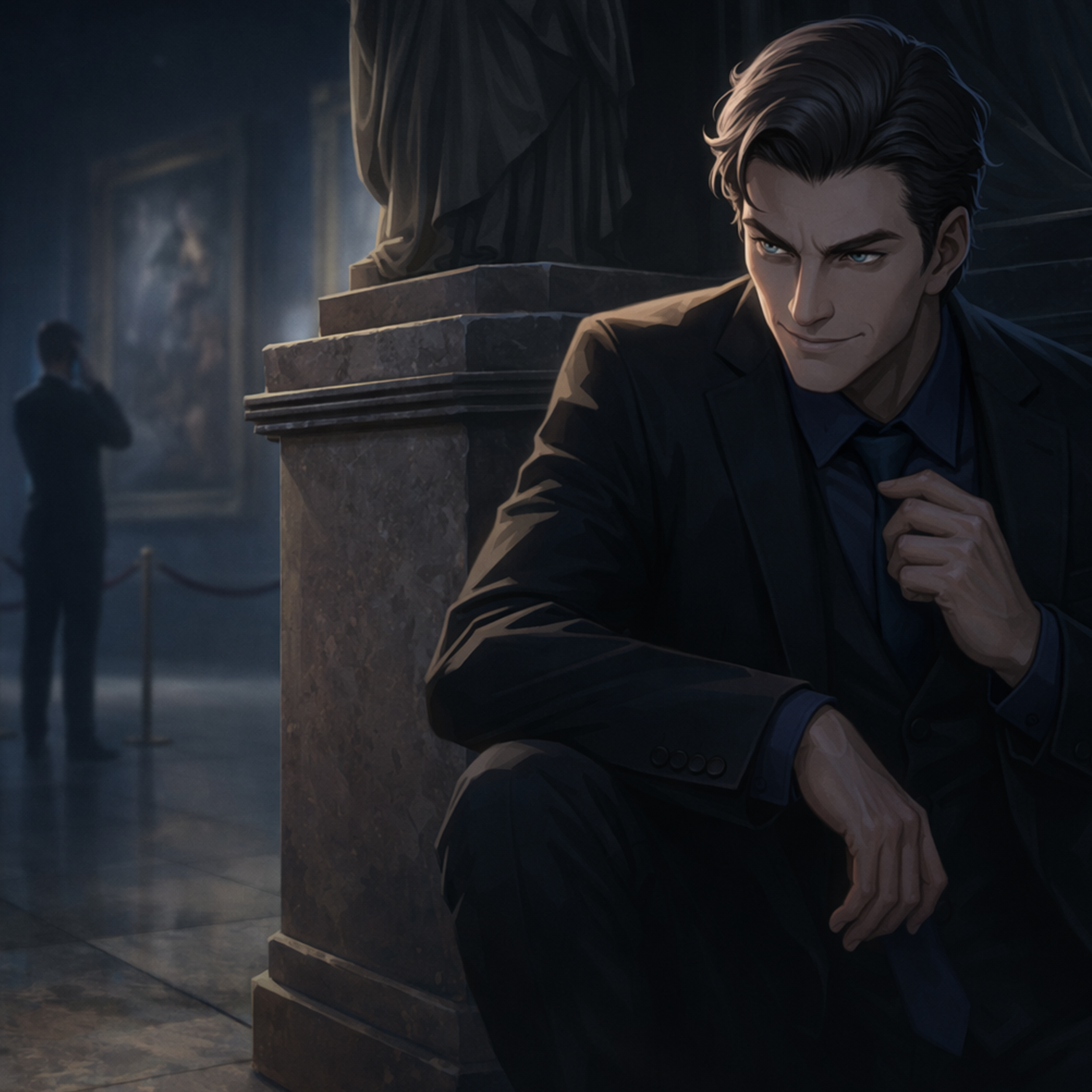
The museum archives
Weslyn Theiwyse begins inside the museum, where he is met by the curator, Isolde Thorne. Isolde acknowledges Weslyn’s donation to the museum and grants him access to the archives, though not without conditions: whatever he reads must be handled carefully and returned exactly where he found it. Once inside, Weslyn asks for lore dating back to before the Rebellion, only to discover that such material is fragmented, scattered, and poorly documented—very likely by design, as though someone once meant to obscure that history.
Among the surviving pieces, he is given an extract from damaged documents:
"Hear now of the Kin, who lived before,
When the sky was whole and the fields were green.We dwelt where rivers ran thick with salmon,
Where barley grew taller than a man,
And orchards gave fruit without counting.Then came the Corrupted One,
Who reached up with burning hands,
And clawed the heavens till they bled.Fire fell.
Rivers died.
Trees became ash."
That text prompts a more personal exchange. Weslyn speaks of his father, who knew the language in which such writings were composed and had learned it from his own family. Isolde responds that her late grandmother had also understood the old ways, and that she bore markings similar to Weslyn’s. When Weslyn mentions finding notes about witches being pushed into water on boats, Isolde makes clear that those records are regarded as archaic and dehumanising. He then asks whether she has ever heard of Dr. Harrow, someone he himself has encountered, but she does not know her personally.
Weslyn presses further, asking whether the old burial grounds still exist. Isolde answers only that it is “difficult to say,” and there is a reluctance in her, even when bribery is hinted at. What finally changes her posture is not money, but ritual language: when Weslyn asks for a measure of wine, bread, and steel, something in that phrasing clearly reaches her. From there, she becomes more willing to help and begins asking him questions of her own, particularly about the law stones and whether he can read them.
Isolde explains that some of the stones depict rites, Rites of Naming, while others map the cycle of the seasons. One concerns the origins of the Kin, and another seems tied to darkness. Weslyn then lays out what he understands: “the corrupted one” came believing he could destroy darkness by learning its secrets. He demanded the masters teach him, and in learning its thousand secret names, he became darkness itself. His golden companions confronted him in Thimarrot, and the dragon turned the fields to glass. It was a catastrophe so total that almost no one survived. Isolde is visibly shaken and asks if what he is describing is the Battle of the Emissaries. When Weslyn confirms it with a nod, her disbelief deepens. How could the Kin possibly know of an event so distant, so long ago? Weslyn explains that the Kin fled by boat, came to these shores, and remade themselves under new laws, but that the memory of that journey has largely been lost. When Isolde asks whether the darkness feared in the woods by the Kin is the same darkness that destroyed Thimarrot, Weslyn tells her no. Darkness, he explains, takes many shapes. She clearly has more questions, but before she can pursue them, she is interrupted and called away.
Law stones and a royal exchange
Left alone, Weslyn continues his research. He first looks into Gareth Ironhelm and finds enough surviving material to confirm that both the Transinsular Battle and Gareth belong to the same historical continuum. The archive preserves battle accounts and copied military summaries, as well as later historical treatment such as Lorian Aelthorne’s 1535 work, written roughly ten years ago in-setting. There are also salvaged artefacts from riverbanks and crossing sites: corroded spearheads, shield bosses, boat fastenings, and other debris attributed to the battle zone, along with commemorative or cautionary displays that connect Arbores to a broader heroic history. What the archive does not have, however, is any provably personal relic that can be said with certainty to have belonged directly to Gareth himself.
Weslyn’s investigation then turns back to the stones. He finds notes from a researcher working from several damaged Law Stone fragments recovered near the estuary settlements of Northern Arboren. The composite text appears to share a common linguistic root with the Spring and Summer Caste inscriptions, though it contains more narrative interpolation. The reading blends law and myth, describing the Kin’s migration after the destruction of Thimarrot, possibly linked to some magical or linguistic cataclysm, “the Dragon opened the sky.” More importantly, it establishes a principle of exile for those touched by forbidden language or celestial omen: a purification rite carried out through sea burial. That custom, it seems, later evolved into caste prohibitions against speaking the Old Tongue.
At one point, Weslyn peeks out and overhears part of an exchange involving Ramseth, the Sun King. From it, he gathers that there is a trade underway: Ramseth’s grandfather’s crown in exchange for an egg-shaped object. He hears it called the Vlose Egg, the Stone of First Return, or the First Spring Stone. The moment he hears those names, the object feels strangely familiar to him, and he retreats back into the library.
Dash enters the museum
Outside the museum, entirely unaware of what is unfolding within, Amaedrianna Blüdfist, Dash Heidmann, and Eldrin Drosk are dealing with their own situation. Dash, using his magical suit, shifts it from white to midnight black. Spotting the guards, he abruptly shoves Eldrin against the wall. For a split second the gesture seems far more intimate than strategic, until it becomes clear he is trying to shield him from notice. Dash then marks a bird symbol on the wall and tells Eldrin to watch for it. He intends to infiltrate the museum himself. Eldrin tells him to stay safe and get out if things go wrong.
Dash climbs an adjacent building, hoping for a better vantage point, but the museum is sealed: blinds closed, interior hidden, nothing visible. Eldrin, left alone below, is approached by guards and improvises a story that he has just been robbed. He tells them someone in rags has stolen his sword and is likely still nearby. At almost the same moment, Amaedrianna collides with a guard and bolts. Eldrin instantly commits to the lie, shouting, “THERE THEY ARE,” which sends the guards after her. The resulting gap is exactly what Dash needs. He takes the opportunity, leaps onto the museum roof, opens a skylight, secures a rope to a vent, and abseils inside. He glides through an opening in the foyer to the upper floor, then repeats the process to descend further, severing and hiding the rope neatly behind him as he goes.
Inside, Dash notices something like a rowboat marked with symbols very similar to those on Weslyn’s body. Beneath it is an inscription: “be warned those deemed as a witch, this is the fate that serves”. He pauses long enough to sketch the boat and its markings in decent detail. While moving through the building, he overhears that in about a week a trade will be completed, that “they will send for whatever it is,” and that the exchange will be marked by a grand opening, one “they will attend.” The voice catches at something in him. It sounds royal, or at least familiar. Then he sees the King’s Hand—Cassiel Vaelor, the Monarch’s Blade, someone the group had once spotted back at The Arcanum—and the reality of the situation lands all at once. Dash has not merely wandered into danger. He has stumbled into the centre of something serious.
He tries to pull back and leave, noticing odd museum pieces as he goes, including The Saltwind Figurehead Fragment, though he cannot afford to linger on it. He also spots documents, one signed by Aron Cogsworth promising to advance the city through technology, and copies that signature with absolute precision. Then, in a desperate attempt to blend in, Dash simply starts walking as though he belongs there. He is stopped anyway. Thinking quickly, he claims to be Finn Calder, a security consultant attached to the museum. When Cassiel is summoned, the lie lasts only moments. Cassiel takes one look at him and has him arrested on sight. Dash continues to insist he is there on museum business, but Cassiel has the King’s guards shackle his hands behind his back. Dash does manage one small victory before losing his freedom: he slips a piton up his sleeve.
Cassiel orders four guards to escort him to the barracks. As they march him away, Dash uses the hidden piton to create just enough slack in the manacle to matter later. Eldrin sees him being led off and freezes, unsure whether to intervene. Dash catches his eye and shakes his head—no. Eldrin instead trails them quietly until they reach the barracks. Along the way, Dash stealthily pulls out his journal, scribbles “let me cook,” and drops it where Eldrin can find it. Eldrin tries to help by using magic to mimic the sound of breaking glass, but the guards ignore it. Realising he cannot do more, he snatches up the journal and races back to the inn.
News at the inn
Back there, Eos and Hatsu are in the middle of a conversation about what each of them is carrying. Hatsu is distinctly unimpressed by how disjointed Eos’s backpack contents are. Then Eldrin barrels in, breathless and nearly incoherent, blurting out, “DASHHASBEENARRESTEDAND..” He has to be made to slow down before anyone can understand him. Hatsu presses him on how this happened at all—they were meant to be staying well away from the museum—and Eldrin struggles through an explanation about Dash being arrested, Amaedrianna running, and guards investigating. Hatsu cuts him off to tell him he is making no sense, so Eldrin resets, breathes, and explains the sequence properly. Even then, Hatsu scolds both him and Dash for returning to the museum after being told that he and Eos were heading back to the inn. When the situation is finally clear, Hatsu goes so far as to scold Dash despite his absence, and both he and Eos half-jokingly, half-seriously decide that perhaps some jail time might do him good if it teaches him not to take such reckless risks.
Weslyn returns to the inn in the middle of talk about selling diamonds for supplies. He asks whether more are needed, only for Eos to casually inform him that Dash has been arrested. Eldrin shows him the note Dash dropped, and Weslyn, taking it literally, briefly assumes Dash is asking to cook a meal.
When Hatsu asks Weslyn how his own time at the museum went, Weslyn explains that someone important interrupted it—a baron, a prince, perhaps something even higher. That catches Eldrin’s attention, and he asks whether it might have been the king himself or someone similarly powerful. The conversation then shifts when Eldrin asks to see Weslyn’s markings. Holding Dash’s journal beside them, he notices a clear resemblance between those symbols and one of Dash’s most recent sketches: the boat from the museum. Weslyn confirms the connection matter-of-factly and explains what they are looking at.
According to him, the markings relate directly to the laws by which the Kin govern themselves—the same laws recorded in stone after the Kin fled the ruins of Thimarrot. One law in particular concerns ensuring that no one is both Kin and cursed, “cursed” here referring to magic of the kind associated with that destroyed place. Thimarrot became extinct because of what happened there. The law that followed required that cursed beings—witches—be given cherry water and bread, then cast out while the community turned its eyes away, because they were no longer counted among the Kin. The boats were central to this rite. They were sent away over water so that no blood would be spilled on the land. Weslyn adds that only one ever returned, and only one was permitted to dwell among them again. Great calamity followed because something came back for what had been given to the sea.
When Hatsu bluntly asks whether Eos is, by that definition, a witch, Weslyn says yes. Hatsu then asks why she is not on a boat. Weslyn explains that he was not born in autumn or winter, is not named, and is not a law speaker. He is spring-born. He has no right to perform that rite. He also says that the place to which they once sent witches was the witch island—the very place where the bastion now stands, meaning the site of The Arcanum. That revelation shocks the group. The Arcanum, a centre of magic and might, standing on what was once the island of exile, feels like a grim historical irony.
Hatsu then asks the practical question: how did Weslyn manage to get in and out of the museum while Dash got arrested? Weslyn explains that he had been invited in by the curator—though he initially misremembers her as a lore keeper—and that she, Isolde, had shared many interests with him, even if he could not immediately recall her name.
Eos then asks how old Weslyn’s faith is, but he rejects that framing. It is not religion, he says, but law. Eos revises the question to tradition, and that he accepts. When pressed for how old it is, Weslyn can only answer in the simplest possible terms: older than him, and apparently older than anyone in the room truly knows.
From there the group turns to the issue of Dash. Weslyn asks what is to be done. Hatsu says rushing in would be foolish, and suggests they wait for Amaedrianna’s return, since she may be able to help. Weslyn is candid that Dash’s current predicament is not his chief concern. He has his own plans to go into the woods and needs to find a way through them. Hatsu assures him that they will go with him. When Weslyn asks whether they should remain until Dash is released, the group lands on a colder practicality: they should pick Dash up last. Eos summarises it cleanly—they still need to do the heist, gather supplies, help Weslyn with what he needs, and then leave. Retrieving Dash before departure, rather than dropping everything for him now, is the likely course.
Weslyn’s mood grows darker as the conversation continues. He says the world is broken. Hatsu tries to counter that nothing is truly lost, only reshaping, but Weslyn seems unconvinced. He speaks as if he feels something larger is winding toward an end. That concern folds directly into the matter of the egg. He wants more information about it. The questioning in the museum was cut short by the arrival of the crowned man, but what he heard was enough to unsettle him. Hatsu asks whether the crowned man had shown up for the same object, and Weslyn confirms that he had. He repeats the names he heard and insists that Vlose Egg is the wrong one. The true name is the Stone of First Return. It carries a meaning rooted in language and stone that he dares not say aloud.
Even without knowing exactly what the stone means to his people, Weslyn is certain of one thing: he has to learn more, and the interest being shown in it by any outside party—including the one who hired them for the heist—is deeply concerning. Hatsu floats the idea of stealing it, letting Weslyn study it, and perhaps returning it unnoticed. Eos says she would also want to study it. Weslyn reminds them that the moment is too urgent for idle fascination. Hatsu then wonders whether Weslyn’s “squirrel” friend could freeze time, giving him the chance to inspect the object without anyone noticing. That leads Eos to ask about Kaelora’s power, pointing out that she once turned her horse, Duckie, into a mouse and wondering if that kind of magic might somehow help. Eldrin dryly notes that power is relative.
The discussion briefly swerves into personality and preference. Eos asks whether someone powerful might help, and Hatsu teasingly asks why she only ever brings up remarkable women. Eos replies that she is not especially impressed by men. Then, with no better immediate plan in hand, the group returns to the same conclusion: they wait for Amaedrianna.
Faith and uncertainty
From there, the talk drifts into something far more emotional. Hatsu asks what Eos thinks about Ayame, but Eos—still clearly occupied by admiration for Amaedrianna—starts talking instead about how amazing Amaedrianna is. Eldrin has to remind her that he had asked about Ayame. The conversation turns inward after that. Eos starts spiralling, troubled by her own power and by comparison to others. Hatsu grounds her by reminding her that the darkness tied to her power was never her fault. To illustrate the point, he speaks of his father’s death and of Thrakgar, explaining that his father made Thrakgar feel as though everything was his fault when it was not, and that this belief grew inside him until it twisted him into what he is now.
Eos relates that idea back to Dash, trying to make sense of why he behaves as he does. Hatsu’s answer is much simpler: Dash does not think. Then he launches into a kind of rough-edged philosophy of faith and wonder. He has seen a dead island burst into life beneath falling sakura leaves. He has seen a golden bee guide him. He has seen one friend restore another from death. He has seen a squirrel in a top hat put on a show for Weslyn. There are things worth caring about, he says, but not things worth worrying over. Worry belongs to people who do not believe.
That, in turn, sparks a quieter exchange with Eldrin. Eldrin mentions that when he faked the robbery earlier, he told the guards he had been robbed; perhaps he could now formally report it and use that as a way into the barracks to help Dash. Hatsu shifts the focus from tactics to identity and asks which symbol Eldrin carries. Eldrin shows him his holy Tempestas symbol, and when asked whether he is proud to bear it, says that he is. Hatsu compares faith to training: Eldrin needs to work on his mind as much as anything else. Eldrin then confesses that when the miraculous trees grew—the ones Hatsu had mentioned—he prayed to Tempestas, but someone else appeared instead, wearing the guise of Sister Vaelith. He is uncertain what that means. Perhaps Tempestas did not come because he is not fully aligned. Hatsu immediately rejects that fear. Tempestas loves Eldrin for who he is, he says—for being chosen, for being a representative, exactly as he stands. The work Eldrin needs to do on himself is not proof of rejection; it is part of faith itself. Eos is moved nearly to tears by the tenderness and certainty in Hatsu’s support.
Cassiel’s questions
Meanwhile, Dash is brought into the barracks and put in a cell. Even in custody he refuses to yield the psychological ground. He tells the guards, “I'd wait until your boss comes to speak to me before continuing.” He warns them that Cassiel will want to hear what he has to say and that if they value their jobs, they should follow orders carefully. The intimidation works. They leave his belongings with him and let him sit. Once alone enough to risk it, Dash coughs, braces himself, and dislocates his thumb with a crack so he can slip his hand free of the manacle. He keeps his head down to hide the pain and carefully holds the restraint in place so the guards will not immediately notice.
Then he waits for Cassiel, anxious despite himself. He has imagined this sort of encounter before. In his mind, he had always had a plan for a moment like this. In one sense, events are unfolding almost exactly according to that fantasy. In another, he has reached the point where the plan ends and improvisation begins.
When Cassiel Vaelor finally arrives, it is almost casually, which says a great deal about the man’s confidence and power. Dash drops the Finn Calder persona and gives his real first name. He stands, showing that he has already slipped the shackles, and points out what that means: he bypassed every layer of security and stood within arm’s reach of “your king.” If his purpose had been murder, the king would be dead. He even displays his daggers to make the point. Instead, he says, this was a demonstration. In the darker corners of the world, where royal uniforms do not reach, he has been hearing whispers—thieves emboldened, assassins speaking the king’s name as though the contract is already waiting. Consequence breeds action; action breeds blood. So he came first, alone, to see whether the rumours were false or whether the king truly sat behind walls a man like him could penetrate. Now they all know the answer. “My job is already done,” he says, warning that the next shadow to slip through the gates may not be so restrained. The only meaningful difference between Dash and the man who truly comes to kill the king is that Dash came to prove it could be done.
Cassiel listens, then fixes on a single phrase: why did Dash say “your king,” not “our king”? Dash says simply that he does not know the man personally. Cassiel answers that he never would. A king’s purpose is not to be personally known. He then asks why Dash should not simply be hanged as an example. Dash replies that he can be useful. Cassiel follows that opening immediately and asks who else Dash works with. Dash offers a name from his fabricated professional past—Mirelle Vaudrelle of Palperroth—saying she can vouch for his work in security. When Cassiel asks why he would move from serving a city figure like that to circling the monarchy, Dash says only that he saw an opportunity and took it.
Cassiel notices Dash’s accent and asks where he is from. Dash answers truthfully: Palperroth. When asked why he left, he says he wanted to build a reputation. Cassiel then suggests that if Dash truly is a man of the shadows, he can prove his worth by giving up magic users or other questionable people in service to the crown. Dash produces a name: “Julian Decker” from Dagtorp. That lands heavily enough for the room to pause. The Decker name carries its own infamy.
From there, Dash is ordered to surrender his belongings and his clothing. He hands over almost everything, even remarking on a book in his possession called “The One True Sun King.” The guards take his gear, though he manages to keep hold of his watch because they do not care enough to take it. Cassiel’s questions turn more personal after that. He asks whether Dash’s scars are healing and uses the subject of his injuries to pry toward family. Dash says his father is dead and that his mother works as a tailor. He carefully omits any mention of wife or children. When pushed for more about his mother, he answers with a dangerous amount of truth: he has not spoken to her in months. Cassiel keeps probing, but Dash manages to keep the rest concealed.
The group at the inn remains divided on what to do, waiting for Amaedrianna to return before deciding how—or whether—to act for Dash. Dash himself sits alone in a cell, his fate uncertain. Worse, the lies and half-truths he used to protect himself have already begun to spread consequences outward. His mother is now being investigated. Mirelle is being questioned. Whether any of that will save him or only tighten the noose around him remains completely unclear.